
Moving and Handling of People
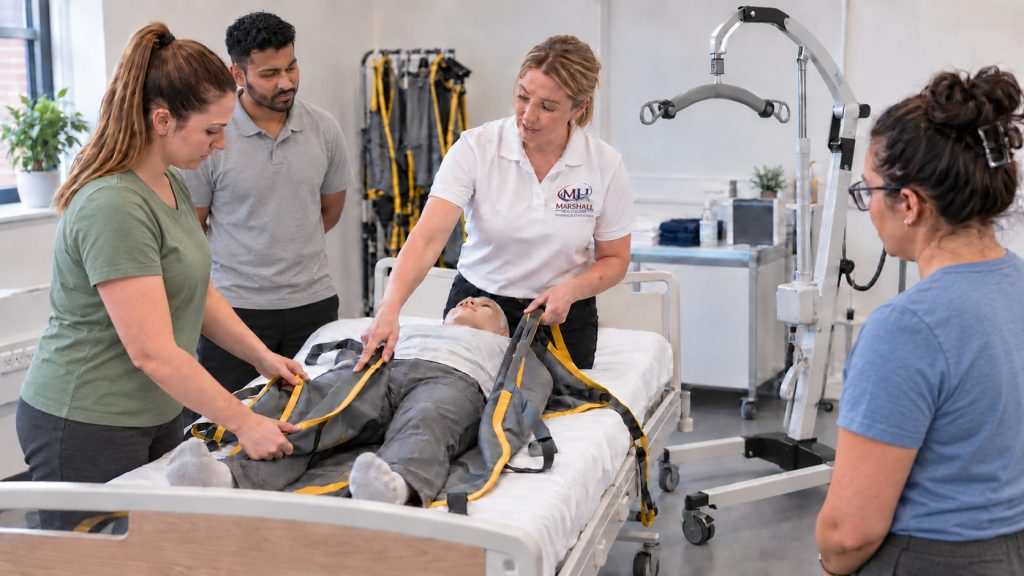
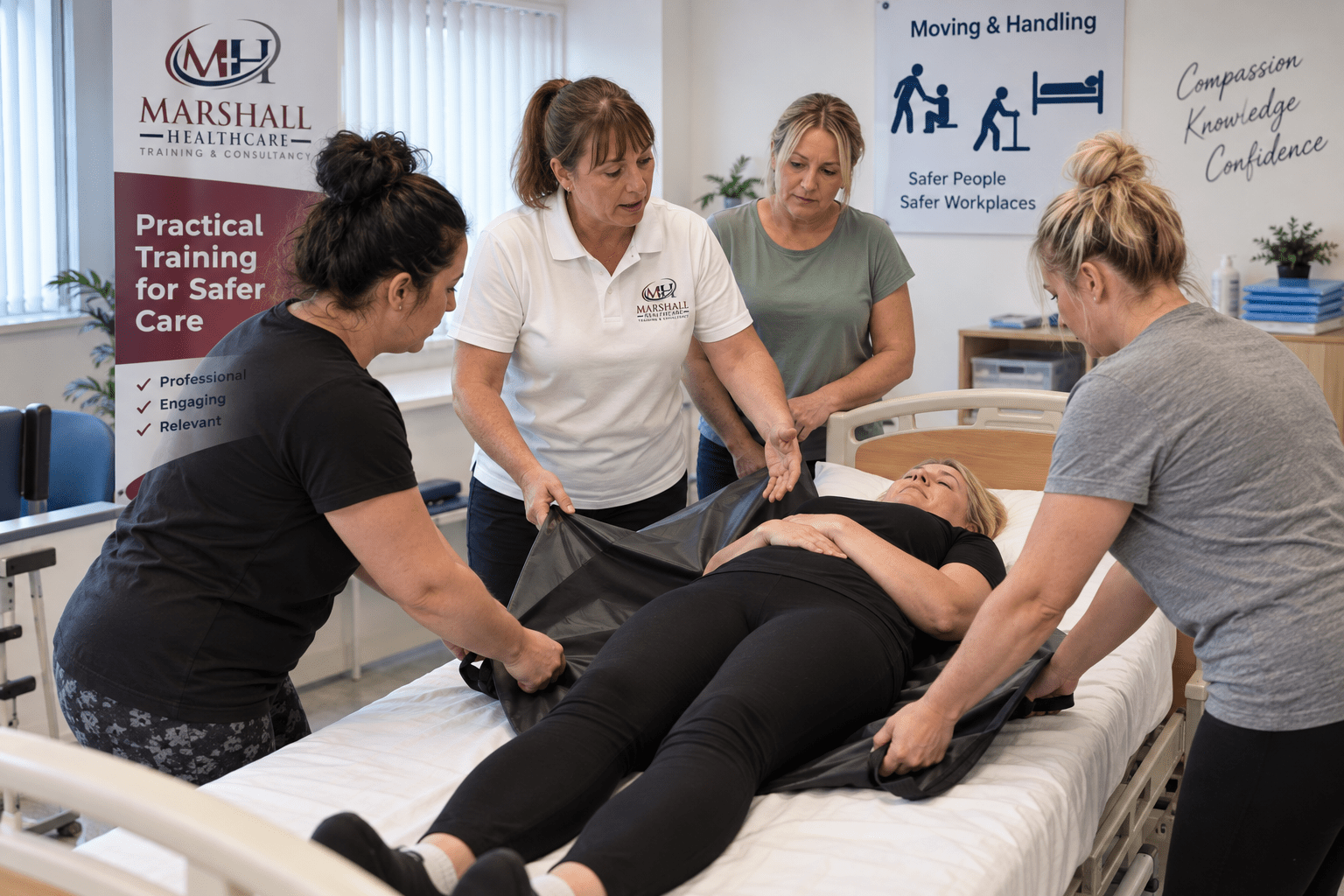
This course provides learners with the knowledge and practical skills required to assist people to move safely while maintaining their independence, dignity and comfort. It covers legal responsibilities, risk assessment, care plans, communication, safer movement principles, transfer equipment, slide sheets, wheelchairs, hoists, slings, falls, equipment checks and incident reporting.
Learners undertake supervised practical exercises using the techniques and equipment relevant to their role.
Many providers schedule the Refresher annually and combine it with short, equipment‑specific add‑ons to keep competence high between full courses.
You can read the Health and Safety Executives guidence on Manual Handling Operations Regulations 1992 here
Learning outcomes
By the end of the course, learners will be able to:
- Explain the main legal responsibilities relating to moving and handling.
- Describe the avoid, assess and reduce hierarchy.
- Use an individual moving and handling plan.
- Complete a dynamic safety check before a movement.
- Consider the task, person, environment, equipment and staff capability.
- Communicate effectively and obtain consent.
- Promote independence, dignity and participation.
- Use stable positions and coordinated movement.
- Recognise unsafe or outdated handling practices.
- Complete appropriate equipment checks.
- Use the relevant transfer and repositioning aids safely.
- Follow a person-specific hoist-and-sling plan where applicable.
- Respond appropriately to falls, pain, equipment failure or changing ability.
- Record and report concerns, incidents and changes accurately.
- Recognise when to stop and request reassessment or additional assistance.
Prerequisites for enrolment
No previous moving and handling qualification is required. Learners must be able to understand the course content and participate safely in practical activities.
Learners should tell the trainer about any injury, health condition or physical limitation that may affect participation. Reasonable adjustments can be considered, provided the required safety and assessment standards remain achievable.
How learning objectives are achieved
Learning objectives are achieved through trainer presentations, demonstrations, discussion, case studies and supervised practical exercises.
Learners use simulated care plans and risk assessments to plan and perform movements. Practical activities may include repositioning, slide-sheet use, sit-to-stand support, seated transfers, wheelchair preparation and hoist-and-sling procedures where these are within the course scope.


 Trustindex verifies that the original source of the review is Google.
 Trustindex verifies that the original source of the review is Google.
 Trustindex verifies that the original source of the review is Google.
 Trustindex verifies that the original source of the review is Google.
 Trustindex verifies that the original source of the review is Google.
 Trustindex verifies that the original source of the review is Google.
 Trustindex verifies that the original source of the review is Google.
 Trustindex verifies that the original source of the review is Google.
 Trustindex verifies that the original source of the review is Google.
 Trustindex verifies that the original source of the review is Google.
